Tallenna
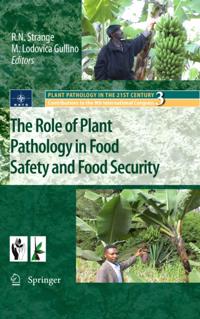
Role of Plant Pathology in Food Safety and Food Security
e-kirja, 2009
englanti
Lue Adobe DRM-yhteensopivassa e-kirjojen lukuohjelmassaTämä e-kirja on kopiosuojattu Adobe DRM:llä, mikä vaikuttaa siihen, millä alustalla voit lukea kirjaa. Lue lisää
This collection of papers represents some of those given at the International Congress for Plant Pathology held in Turin in 2008 in the session with the title "e;The Role of Plant Pathology in Food Safety and Food Security"e;. Although food safety in terms of "e;Is this food safe to eat?"e; did not receive much direct attention it is, never theless, an important topic. A crop may not be safe to eat because of its inh- ent qualities. Cassava, for example, is cyanogenic, and must be carefully prepared if toxicosis is to be avoided. Other crops may be safe to eat providing they are not infected or infested by microorganisms. Mycotoxins are notorious examples of compounds which may contaminate a crop either pre- or post-harvest owing to the growth of fungi. Two papers in this book deal with toxins, one by Barbara Howlett and co-workers and the other by Robert Proctor and co-workers. In the first of these, the role of sirodesmin PL, a compound produced by Leptosphaeria ma- lans, causal agent of blackleg disease of oilseed rape (Brassica napus), is discussed. The authors conclude that the toxin plays a role in virulence of the fungus and may also be beneficial in protecting the pathogen from other competing micro-organisms but there seem to be no reports of its mammalian toxicity.
- Toimittaja
- R.N. Strange, Maria Lodovica Gullino
- ISBN
- 9781402089329
- Kieli
- englanti
- Julkaisupäivä
- 28.11.2009
- Kustantaja
- SPRINGER NETHERLANDS
- Formaatti
- PDF - Adobe DRM
- Lue e-kirjoja täällä
- Lue e-kirja mobiililaitteella/tabletilla
- Lukulaite
- Tietokone