Spara
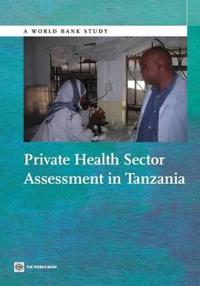
Private Health Sector Assessment in Tanzania

Mainland Tanzania exemplifies the developing world’s struggle to achieve middle-income status while confronting widespread poverty and substantial health challenges. Tanzania’s struggle with HIV/AIDS, reproductive and child health, malaria, and tuberculosis are characterised by both positive recent trends and persistent challenges. A high disease burden coupled with finite public sector resources has led the government of Tanzania to increasingly seek innovative tools to protect the health and wellbeing of its citizens. Previous reform efforts have included decentralising decision making authority to local governments to improve the responsiveness of public sector programs and partnering with faith-based health facilities to expand the government’s reach into rural areas.
In recent years, the government has increasingly tried to leverage the private health sector’s capacity to strengthen the Tanzanian health system—first by removing the ban on private practice in 1991 and then by emphasising PPPs in its national health policies and strategic plans. In response, the private health sector has grown and organised into several umbrella organisations, such as the Christian Social Services Commission (CSSC), the Association of Private Health Facilities in Tanzania (APHFTA), and the National Muslim Council of Tanzania (BAKWATA). Together, the public and private sectors have laid the policy groundwork for improved collaboration. Engaging the private sector beyond dialogue and operationalising PPPs has proven more difficult due to lingering distrust and a lack of communication between the sectors at lower levels. Currently, the private health sector is actively involved in the delivery of key health services, especially related to family planning, child health, and malaria. However, there are numerous private health sector providers and other actors that the Tanzanian government can better leverage to relieve the burden on public sector resources and produce better health outcomes for all Tanzanians.
This assessment makes several recommendations to eliminate current obstacles, especially around the areas of the policy and governance, health financing, service delivery, pharmaceutical procurement, and human resources for health.
In recent years, the government has increasingly tried to leverage the private health sector’s capacity to strengthen the Tanzanian health system—first by removing the ban on private practice in 1991 and then by emphasising PPPs in its national health policies and strategic plans. In response, the private health sector has grown and organised into several umbrella organisations, such as the Christian Social Services Commission (CSSC), the Association of Private Health Facilities in Tanzania (APHFTA), and the National Muslim Council of Tanzania (BAKWATA). Together, the public and private sectors have laid the policy groundwork for improved collaboration. Engaging the private sector beyond dialogue and operationalising PPPs has proven more difficult due to lingering distrust and a lack of communication between the sectors at lower levels. Currently, the private health sector is actively involved in the delivery of key health services, especially related to family planning, child health, and malaria. However, there are numerous private health sector providers and other actors that the Tanzanian government can better leverage to relieve the burden on public sector resources and produce better health outcomes for all Tanzanians.
This assessment makes several recommendations to eliminate current obstacles, especially around the areas of the policy and governance, health financing, service delivery, pharmaceutical procurement, and human resources for health.
- Författare
- James White, Barbara O'Hanlon, Grace Chee, Emmanuel Malangalila, Adeline Kimambo, Jorge Coarasa, Sean Callahan, Ilana Ron Levey, Kim McKeon
- ISBN
- 9781464800405
- Språk
- Engelska
- Vikt
- 456 gram
- Serie
- World Bank Studies
- Utgivningsdatum
- 2013-10-29
- Förlag
- World Bank Publications
- Sidor
- 182