Spara
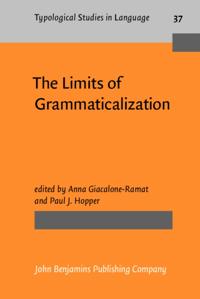
Limits of Grammaticalization
e-bok, 1998
Engelska

Läs i Adobe DRM-kompatibel e-boksläsareDen här e-boken är kopieringsskyddad med Adobe DRM vilket påverkar var du kan läsa den. Läs mer
The earliest use of the term "e;grammaticalization"e; was to refer to the process whereby lexical words of a language (such as English keep in "e;he keeps bees"e;) become grammatical forms (such as the auxiliary in "e;he keeps looking at me"e;). Changes of this kind, which involve semantic fading and a downshift from a major to a minor category, have generally been agreed to come under the heading of grammaticalization. But other changes that equally contribute to new grammatical forms do not involve this kind of fading. In recent years, a debate has arisen over how to constrain the term theoretically. Is grammaticalization to be distinguished from "e;lexicalization"e;, the creation and fixing of new words out of older patterns of compounding? If so, how is the line to be drawn between a form that is grammatical and one that is lexical? Should the term "e;grammaticalization"e; be extended to the study of the origins of grammatical constructions in general? If so, it will have to include broader issues such as word order change and the reanalysis of phrases. What principles govern these processes? Is grammaticalization a unidirectional event, or can change occur in the reverse direction? The authors of the papers in this volume approach these important questions from a variety of data types, including historical texts, creoles, and a typologically broad sample of modern and ancient languages.
- ISBN
- 9789027275578
- Språk
- Engelska
- Utgivningsdatum
- 1998-07-15
- Tillgängliga elektroniska format
- PDF - Adobe DRM
- Läs e-boken här
- E-boksläsare i mobil/surfplatta
- Läsplatta
- Dator