Spara
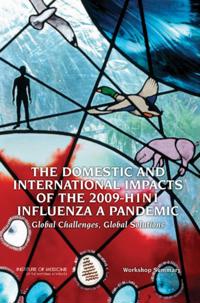
Domestic and International Impacts of the 2009-H1N1 Influenza A Pandemic
e-bok, 2010
Engelska

Läs i Adobe DRM-kompatibel e-boksläsareDen här e-boken är kopieringsskyddad med Adobe DRM vilket påverkar var du kan läsa den. Läs mer
In March and early April 2009, a new, swine-origin 2009-H1N1 influenza A virus emerged in Mexico and the United States. During the first few weeks of surveillance, the virus spread by human-to-human transmission worldwide to over 30 countries. On June 11, 2009, the World Health Organization (WHO) raised the worldwide pandemic alert level to Phase 6 in response to the ongoing global spread of the novel influenza A (H1N1) virus. By October 30, 2009, the H1N1 influenza A had spread to 191 countries and resulted in 5,700 fatalities. A national emergency was declared in the United States and the swine flu joined SARS and the avian flu as pandemics of the 21st century. Vaccination is currently available, but in limited supply, and with a 60 percent effectiveness rate against the virus. The story of how this new influenza virus spread out of Mexico to other parts of North America and then on to Europe, the Far East, and now Australia and the Pacific Rim countries has its origins in the global interconnectedness of travel, trade, and tourism. Given the rapid spread of the virus, the international scientific, public health, security, and policy communities had to mobilize quickly to characterize this unique virus and address its potential effects. The World Health Organization and Centers for Disease Control have played critical roles in the surveillance, detection and responses to the H1N1 virus. The Domestic and International Impacts of the 2009-H1N1 Influenza A Pandemic: Global Challenges, Global Solutions aimed to examine the evolutionary origins of the H1N1 virus and evaluate its potential public health and socioeconomic consequences, while monitoring and mitigating the impact of a fast-moving pandemic. The rapporteurs for this workshop reported on the need for increased and geographically robust global influenza vaccine production capacities; enhanced and sustained interpandemic demand for seasonal influenza vaccines; clear "e;triggers"e; for pandemic alert levels; and accelerated research collaboration on new vaccine manufacturing techniques. This book will be an essential guide for healthcare professionals, policymakers, drug manufacturers and investigators.
- Undertitel
- Global Challenges, Global Solutions: Workshop Summary
- Redaktör
- Alison Mack, Eileen R. Choffnes, David A. Relman
- ISBN
- 9780309156882
- Språk
- Engelska
- Utgivningsdatum
- 2010-06-04
- Förlag
- National Academies Press
- Tillgängliga elektroniska format
- Epub - Adobe DRM
- Läs e-boken här
- E-boksläsare i mobil/surfplatta
- Läsplatta
- Dator