Spara
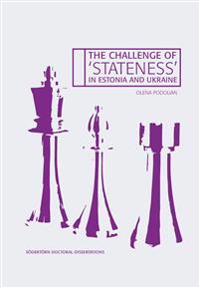
The Challenge of 'Stateness' in Estonia and Ukraine

What influence have the OSCE, Council of Europe, EU and Russia had on policy andlegislative adaptation in Estonia and Ukraine since 1991?‘Stateness’ is congruence between the territorial definition and the right of citizenshipin the state. Surprisingly, it is a much-neglected concept in the state-building anddemocratisation literature. To address this gap, the concept of stateness is expandedupon and used in this work to answer the above question. This is done by means ofanalysis of policy areas operationalising stateness.By analysing the impact of the international actors cited above as the causal factor inthe consolidation of stateness, conclusions are drawn as to the manner of influence oftheir policy demands and expectations on domestic policy and legislative adaptationin Estonia and Ukraine since 1991. The theoretical and conceptual contribution tostate-building in comparative European politics is thus developed further by thiswork. Moreover, the empirical contribution provides an applicableoperationalisation of the concept through respective policy areas.Olena Podolian is a political scientist. This study is her dissertation, completed at theDepartment of Political Science, and in connection with the Baltic and East EuropeanGraduate School (BEEGS), at Södertörn University, Sweden.
- Undertitel
- The international dimension a quarter of a century into independence
- Författare
- Olena Podolian
- Upplaga
- Print on Demand ed.
- ISBN
- 9789189109117
- Språk
- Engelska
- Vikt
- 839 gram
- Utgivningsdatum
- 2020-09-02
- Förlag
- Sodertorn University
- Sidor
- 534