Spar
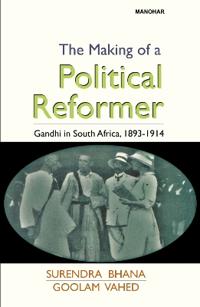
The Making of a Political Reformer
innbundet, 2024
Engelsk
The religious and cultural orientation of South African Indians was influenced Mohandas K. Gandhi, and this study is the first to explore its relevance to his moral, philosophical, and political growth. Gandhi and his compatriots developed 'Indianness' in transnational politics, and used it as a lever to win imperial protection against discriminating practices in colonial South Africa. This linked South Africa to the British Raj in India.
In working closely with his compatriots, Gandhi operated within the cultural and religious parameters set by them, and creatively redefined them. In India, he would expand on the ideas and strategies he developed back in South Africa.
While useful in an imperial setting, 'Indianness' became embedded in the system of White rule at the turn of the twentieth century. Moreover, the emerging political economy in Natal produced sharp competition and conflict, as Africans, Indians, and Whites came into contact in agriculture, industry, commerce, and other services. Racial antipathies simultaneously grew. As subordinate groups, Indians and Africans both developed stereotypes of each other as a way of identifying themselves more sharply to stress differences.
While Gandhi was sensitive to the legitimate political aspirations of Africans, he did not feel the need to spell out how Indians should relate to them because India was at the centre of his thinking. Gandhi's legacy inspired succeeding generations of South African activists. It connects him to Nelson Mandela, who led South Africa to freedom and democracy in the last decade of the twentieth century, yet some have questioned his legacy. This study offers perspectives that more accurately situate Gandhi's role in South Africa's history.
In working closely with his compatriots, Gandhi operated within the cultural and religious parameters set by them, and creatively redefined them. In India, he would expand on the ideas and strategies he developed back in South Africa.
While useful in an imperial setting, 'Indianness' became embedded in the system of White rule at the turn of the twentieth century. Moreover, the emerging political economy in Natal produced sharp competition and conflict, as Africans, Indians, and Whites came into contact in agriculture, industry, commerce, and other services. Racial antipathies simultaneously grew. As subordinate groups, Indians and Africans both developed stereotypes of each other as a way of identifying themselves more sharply to stress differences.
While Gandhi was sensitive to the legitimate political aspirations of Africans, he did not feel the need to spell out how Indians should relate to them because India was at the centre of his thinking. Gandhi's legacy inspired succeeding generations of South African activists. It connects him to Nelson Mandela, who led South Africa to freedom and democracy in the last decade of the twentieth century, yet some have questioned his legacy. This study offers perspectives that more accurately situate Gandhi's role in South Africa's history.
- Undertittel
- Gandhi in South Africa, 1893-1914
- Redaktør
- Surendra Bhana, Goolam Vahed
- ISBN
- 9788173046124
- Språk
- Engelsk
- Vekt
- 550 gram
- Utgivelsesdato
- 20.11.2024
- Antall sider
- 182






