Spar
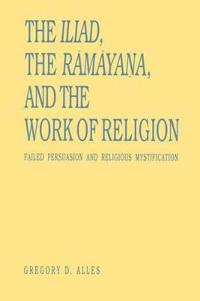
The Iliad, the Ramaya?a, and the Work of Religion
One often reads that literature works to construct worlds of meaning. This book argues that the Iliad and the Ramayana did not construct worlds so much as address them. It argues further that the worlds the Iliad and the Ramayana addressed were worlds in which words did not mean so much as persuade. In both ancient Greece and India, persuasion was central to harmonious social interaction. The failure of persuasion marked the limits of the patterns that configured human society; it also threatened social chaos. The work of the Iliad and the Ramayana was to transcend the limits and mystify the threat. In performing this work, the two poems made the configurations of social order fundamentally tenable. They also enabled them to endure up to the present day.
Gregory Alles seeks to bring an awareness of some of the limits of significant ideological practices in the academic study of religions, especially the pursuit known as the history of religions. In the twentieth century, the history of religions has been formulated as a hermeneutical discipline. Its task has been to understand religious meanings, in whatever way the process of understanding meanings has been conceived. This investigation suggests, however, that a hermeneutical history of religions is too narrow. Among other things, it overlooks the religious work that these two poems perform. This study proposes that historians of religions conceive of their task not as hermeneutics but as history, that is, as a principled investigation of events in which religion occurs.
- Undertittel
- Failed Persuasion and Religious Mystification
- Forfatter
- Gregory D. Alles
- ISBN
- 9780271013206
- Språk
- Engelsk
- Vekt
- 367 gram
- Serie
- Hermeneutics
- Utgivelsesdato
- 15.9.1994
- Antall sider
- 216






