Spar
Woman Babylon and the Marks of Empire
e-bok, 2014
Engelsk
Les i Adobe DRM-kompatibelt e-bokleserDenne e-boka er kopibeskyttet med Adobe DRM som påvirker hvor du kan lese den. Les mer
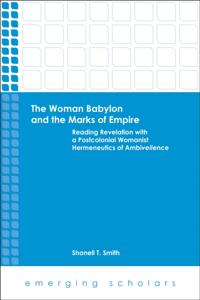
The "e;Great Whore"e; of the Book of Revelationthe hostile symbolization used to illustrate the authors critique of empirehas attracted considerable attention in Revelation scholarship. Feminist scholar Tina Pippin criticizes the use of gendered metaphors "e;Babylon"e; as a tortured womanwhich she asserts reflect an inescapably androcentric, even misogynistic, perspective. Alternatively, Elisabeth Schssler Fiorenza understands Johns rhetoric and imagery not simply in gendered terms, but in political terms as well, observing that "e;Babylon"e; relies on conventionally coded feminine language for a city.Shanell T. Smith seeks to dismantle the either/or dichotomy within the Great Whore debate by bringing the categories of race/ethnicity and class to bear on Johns metaphors. Her socio-cultural context impels her to be sensitive to such categories, and, therefore, leads her to hold the two elements, "e;woman"e; and "e;city,"e; in tension, rather than privileging one over the other. Using postcolonial womanist interpretation of the woman Babylon, Smith highlights the simultaneous duality of her characterizationher depiction as both a female brothel slaveandas an empress or imperial city. Most remarkably, however, Smiths reading also sheds light on her own ambivalent characterization as both a victim and participant in empire.
- Undertittel
- Reading Revelation with a Postcolonial Womanist Hermeneutics of Ambiveilence
- Redaktør
- Smith Shanell T. Smith
- ISBN
- 9781451472431
- Språk
- Engelsk
- Utgivelsesdato
- 1.10.2014
- Tilgjengelige elektroniske format
- Epub - Adobe DRM
- Les e-boka her
- E-bokleser i mobil/nettbrett
- Lesebrett
- Datamaskin






