Spar
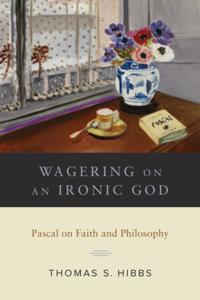
Wagering on an Ironic God
Les i Adobe DRM-kompatibelt e-bokleserDenne e-boka er kopibeskyttet med Adobe DRM som påvirker hvor du kan lese den. Les mer
"e;Philosophers startle ordinary people. Christians astonish the philosophers."e; --Pascal, Pensees In Wagering on an Ironic God Thomas S. Hibbs both startles and astonishes. He does so by offering a new interpretation of Pascal's Pensees and by showing the importance of Pascal in and for a philosophy of religion. Hibbs resists the temptation to focus exclusively on Pascal's famous "e;wager"e; or to be beguiled by the fragmentary and presumably incomplete nature of Pensees. Instead he discovers in Pensees a coherent and comprehensive project, one in which Pascal contributed to the ancient debate over the best way of life--a life of true happiness and true virtue. Hibbs situates Pascal in relation to early modern French philosophers, particularly Montaigne and Descartes. These three French thinkers offer distinctly modern accounts of the good life. Montaigne advocates the private life of authentic self-expression, while Descartes favors the public goods of progressive enlightenment science and its promise of the mastery of nature. Pascal, by contrast, renders an account of the Christian religion that engages modern subjectivity and science on its own terms and seeks to vindicate the wisdom of the Christian vision by showing that it, better than any of its rivals, truly understands human nature. Though all three philosophers share a preoccupation with Socrates, each finds in that figure a distinct account of philosophy and its aims. Pascal finds in Socrates a philosophy rich in irony: philosophy is marked by a deep yearning for wisdom that is never wholly achieved. Philosophy is a quest without attainment, a love never obtained. Absent Cartesian certainty or the ambivalence of Montaigne, Pascal's practice of Socratic irony acknowledges the disorder of humanity without discouraging its quest. Instead, the quest for wisdom alerts the seeker to the presence of a hidden God. God, according to Pascal, both conceals and reveals, fulfilling the philosophical aspiration for happiness and the good life only by subverting philosophy's very self-understanding. Pascal thus wagers all on the irony of a God who both startles and astonishes wisdom's true lovers.
- Undertittel
- Pascal on Faith and Philosophy
- Forfatter
- Thomas S. Hibbs
- ISBN
- 9781481306409
- Språk
- Engelsk
- Utgivelsesdato
- 16.3.2017
- Forlag
- Baylor University Press
- Tilgjengelige elektroniske format
- Epub - Adobe DRM
- Les e-boka her
- E-bokleser i mobil/nettbrett
- Lesebrett
- Datamaskin






