Spar
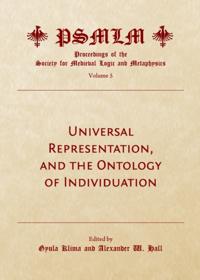
Universal Representation, and the Ontology of Individuation (Volume 5
e-bok, 2011
Engelsk
Les i Adobe DRM-kompatibelt e-bokleserDenne e-boka er kopibeskyttet med Adobe DRM som påvirker hvor du kan lese den. Les mer
There is broad agreement in the medieval tradition that we conceive things in the world owing to the transmission of intelligible content through various media that culminates in the concept by which something in the world is cognitively present for us. Yet how the intelligible content is transmitted along with the nature of the ultimate object of cognition provoked ceaseless debate. The first three essays in Universal Representation, and the Ontology of Individuation consider these issues as they play out in the metaphysics and natural philosophy of Avicenna, Averroes, Thomas Aquinas, Ockham and others.The last three essays turn to the metaphysical problem of the nature of the principle of individuation. Moderate realists believe in the existence of immanent general natures such as humanity and equinity, whereby individuals are members of diverse natural kinds. Accordingly, moderate realists such as Aquinas, Henry of Ghent and Duns Scotus need to investigate the nature of the individuating principle by which members of one and the same natural kind differ from one another. Nominalists, for their part, need not concern themselves with any principle of individuation as, for them, all reality is individual, there being no immanent universals; but this release comes at the cost of a new set of epistemological problems.
- Undertittel
- Proceedings of the Society for Medieval Logic and Metaphysics)
- Redaktør
- Gyula Klima
- ISBN
- 9781443834124
- Språk
- Engelsk
- Utgivelsesdato
- 22.9.2011
- Tilgjengelige elektroniske format
- PDF - Adobe DRM
- Les e-boka her
- E-bokleser i mobil/nettbrett
- Lesebrett
- Datamaskin






