Spar
The Soft Budget Constraint — The Emergence, Persistence and Logic of an Institution
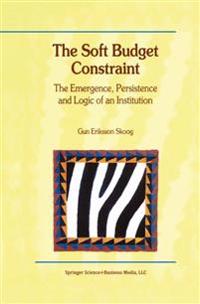
The soft budget constraint, a popular metaphor, is a paradox. In socialist economies, it implies that the state tends to bail out state-owned firms in financial trouble, in spite of the tremendous performance problems of the entire system that result. When the socialist system broke down, the soft budget constraint was expected to disappear. However, it seems to persist, and its persistence appears to hamper the transition process itself. This book seeks an answer to this paradox by increasing our understanding of why the soft budget constraint exists. By investigating state-owned enterprises in Tanzania before, during and after socialism, the prevalence of the soft budget constraint is examined and an explanation of its existence is suggested. The approach is institutional. The soft budget constraint is defined as an informal institution and an invisible-hand explanation of its emergence, persistence and logic is applied. The book shows that the soft budget constraint emerged as an unintended consequence of the establishment of the Tanzania socialist system in the 1970s. A behavioral solution to recurrent systemic problems was offered, and thus the soft budget constraint performed several functions. Once established, its very existence set off a cumulative process of self-generation. Four reinforcement mechanisms that accounted for its maintenance during Tanzanian socialism are identified. Its character as an informal rule helps to explain why it persisted during market-oriented reform, initiated in the mid-1980s. The soft budget constraint was part of the socialist heritage, was adapted to systemic change, and influenced the direction and character of this change.
- Forfatter
- Gun Eriksson Skoog
- Opplag
- 2000 ed.
- ISBN
- 9780792379102
- Språk
- Engelsk
- Vekt
- 446 gram
- Utgivelsesdato
- 30.11.2000
- Forlag
- Springer
- Antall sider
- 400






