Spar
The Renaissance Reform of Medieval Music Theory
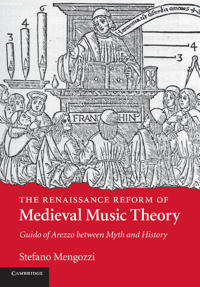
Modern scholars have often portrayed the method of hexachordal solmization - the sight-singing method introduced by the 11th-century monk Guido of Arezzo - as the diatonic foundation of early music. Stefano Mengozzi challenges this view by examining a representative sample of the primary sources of solmization theory from Guido of Arezzo to Gioseffo Zarlino. These texts show that six-syllable solmization was only an option for sight-singing that never imposed its operational 'sixth-ness' onto the diatonic system, already grounded on the seven pitch letters. It was primarily through the agency of several 'classicizing' theorists of the humanist era that the six syllables came to be mistakenly conceived as a fundamental diatonic structure - a 'hexachord' built from the 'tetrachord' of the Ancient Greeks. The book will be of particular interest to readers seeking to deepen their knowledge of medieval and Renaissance musical thought with an eye to major intellectual trends of the time.
- Undertittel
- Guido of Arezzo between Myth and History
- Forfatter
- Stefano Mengozzi
- ISBN
- 9780521884150
- Språk
- Engelsk
- Vekt
- 760 gram
- Utgivelsesdato
- 11.2.2010
- Antall sider
- 304