Spar
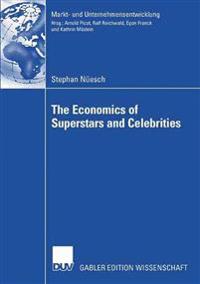
The Economics of Superstars and Celebrities
Forfatter:
heftet, 2007
Tysk
Foreword In 1981 University of Chicago economist Sherwin Rosen wrote his famous paper The Economics of Superstars addressing the question why a small number of performers are paid so much more than the average person in their field far more than their close competitors. Rosen s paper provided a careful explanation of the superstar phenomenon focusing on two distinct economic mechanisms: imperfect substitution among different sellers of the service and the substantial scale economies of joint consumption technologies. In 1985 Moshe Adler added an important insight to the superstar discussion. Whereas Rosen s imperfect substitution among sellers was based on objective talent differentials, Adler pointed to the fact that perceived talent differentials may be a result of past consumption and network externalities among consumers with similar consumption capital. As a consequence, superstars could emerge among performers of equal talent in a bandwagon process triggered by pure luck or media strategies. The thesis of Stephan Nuesch picks up these classical superstar explanations and tries to expand their scope by introducing an additional interaction benefit in the consumption of a star s performance. Debriefing the performance of a performer in the family, with friends, workmates or acquaintances may generate additional value. In contrast to the consumption benefit, the interaction benefit is not at all dependent on the performer s talent. A mere gossip externality suffices to give rise to the phenomenon of celebrities who are basically known for their well-knowness."
- Forfatter
- Stephan Nüesch, Prof. Dr. Egon Franck
- ISBN
- 9783835008496
- Språk
- Tysk
- Vekt
- 310 gram
- Utgivelsesdato
- 23.8.2007
- Antall sider
- 141






