Spar
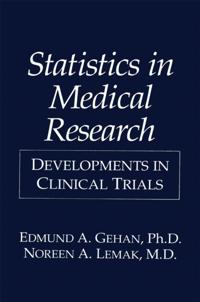
Statistics in Medical Research
Les i Adobe DRM-kompatibelt e-bokleserDenne e-boka er kopibeskyttet med Adobe DRM som påvirker hvor du kan lese den. Les mer
In 1890, General Francis A. Walker, president of both the Massachusetts Institute of Technology and the American Statistical Association, wrote There is reason to wish that all citizens, from the highest to the lowest, might undergo so much of training in statistics as should enable them to detect the errors lurking in quantitative statements regarding social and economic matters which may ... be ad- dressed to them as voters or as critics of public policies. [E A. Walker, 1890; reprinted in Noether, 1989] It has been more than a century since Walker stated his wish, but progress has been slow, just as advancement in the establishment of statistical principles and methodology has been laborious and difficult over the centuries. We have tried to describe the milestones in this development and how each generation of scientists built on the heritage and foundations laid by their predecessors. Many historians dismiss the "e;great man theory,"e; which alleges that giant "e;leaps of human knowledge are made by great thinkers who transcend the boundaries of their times; great scientists don't leap outside their time, but somewhere else in their own time"e; (Hevly, 1990). We found this to be the case in the history of statistics. Even the innovative writings of Karl Pearson and Sir Ronald Fisher that became the foundation of modern mathematical statistics were the outcome of two centuries of antecedent ideas and information.
- Undertittel
- Developments in Clinical Trials
- Forfatter
- E.A. Gehan, N.A. Lemak
- ISBN
- 9781461525189
- Språk
- Engelsk
- Utgivelsesdato
- 6.12.2012
- Forlag
- SPRINGER US
- Tilgjengelige elektroniske format
- PDF - Adobe DRM
- Les e-boka her
- E-bokleser i mobil/nettbrett
- Lesebrett
- Datamaskin