Spar
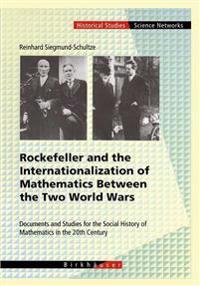
Rockefeller and the Internationalization of Mathematics Between the Two World Wars
Forfatter:
innbundet, 2001
Engelsk
This work examines the influential foray by the Rockefeller family into the field of mathematics. It analyzes the documented evaluation processes behind the philanthropic involvement of the Rockefeller institutions, arguing that the carrer of a generation of pathbreakers in modern mathematics, such as S. Banach, B. l. van der Waerden and Andre Weil, were decisively affected by their becoming fellows of the rockefeller-funded International education Board in the 1920s. It provides a detailed history of mathematics and physics in the 20th century as well as analyzing the comparative developments of mathematics in Europe and the United States.
- Undertittel
- Document and Studies for the Social History of Mathematics in the 20th Century
- Forfatter
- Reinhard Siegmund-Schultze
- Opplag
- 2001 ed.
- ISBN
- 9783764364687
- Språk
- Engelsk
- Vekt
- 446 gram
- Utgivelsesdato
- 1.4.2001
- Forlag
- Birkhauser Verlag AG
- Antall sider
- 341






