Spar
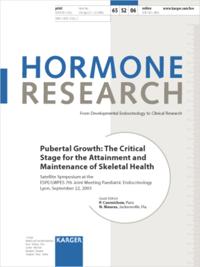
Pubertal Growth: The Critical Stage for the Attainment and Maintenance of Skeletal Health
e-bok, 2006
Engelsk
Les i Adobe DRM-kompatibelt e-bokleserDenne e-boka er kopibeskyttet med Adobe DRM som påvirker hvor du kan lese den. Les mer
The human race is unique in being the only species to experience a pubertal growth spurt. The mechanisms that underlie this spurt include an increase in pulse amplitude, pulse mass, and daytime secretion of growth hormone, which leads to increased IGF 1 levels. In addition, androgens increase the secretion of growth hormone, exert a direct effect on IGF 1, and affect the epiphyseal growth plate directly. During the pubertal growth spurt, the rate of growth increases to a peak in both genders, declines gradually, and eventually stops. The total gain in height during puberty will be greater in individuals who have an early onset of puberty compared with those who mature later. By adulthood, males are typically about 7% taller than females, mainly because of the timing of epiphyseal fusion. At the 2005 Congress of the European Society for Paediatric Endocrinology, a distinguished panel of experts met to discuss various aspects of the topic of bone mass and puberty at a symposium entitled 'Pubertal growth: the critical stage for the attainment and maintenance of skeletal health.' This supplement contains the proceedings from this symposium.
- Undertittel
- Satellite Symposium at the ESPE/LWPES 7th Joint Meeting Paediatric Endocrinology, Lyon, September 2005. Supplement Issue: Hormone Research 2006, Vol. 65, Suppl. 2
- Redaktør
- Czernichow, Mauras
- ISBN
- 9783318013542
- Språk
- Engelsk
- Utgivelsesdato
- 18.5.2006
- Forlag
- S. Karger
- Tilgjengelige elektroniske format
- PDF - Adobe DRM
- Les e-boka her
- E-bokleser i mobil/nettbrett
- Lesebrett
- Datamaskin