Spar
Prohibition's Greatest Myths
innbundet, 2020
Engelsk
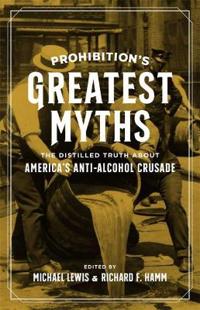
The word ""prohibition"" tends to conjure up images of smoky basement speakeasies, dancing flappers, and hardened gangsters bootlegging whiskey. Such stereotypes, a prominent historian recently noted in the Washington Post, confirm that Americans' ""common understanding of the prohibition era is based more on folklore than fact."" Popular culture has given us a very strong, and very wrong, picture of what the period was like. Prohibition's Greatest Myths: The Distilled Truth about America's Anti-ÂAlcohol Crusade aims to correct common misperceptions with ten essays by scholars who have spent their careers studying different aspects of the era. Each contributor unravels one myth, revealing the historical evidence that supports, complicates, or refutes our longÂ-held beliefs about the Eighteenth Amendment.
H. Paul Thompson Jr., Joe L. Coker, Lisa M. F. Andersen, and Ann Marie E. Szymanski examine the political and religious factors in early twentiethÂ-century America that led to the push for prohibition, including the temperance movement, the influences of religious conservatism and liberalism, the legislation of individual behavior, and the lingering effects of World War I. From there, several contributors analyze how the laws of prohibition were enforced. Michael Lewis discredits the idea that alcohol consumption increased during the era, while Richard F. Hamm clarifies the connections between prohibition and organized crime, and Thomas R. Pegram demonstrates that issues other than the failure of prohibition contributed to the amendment's repeal. Finally, contributors turn to prohibition's legacy. Mark Lawrence Schrad, Garrett Peck, and Bob L. Beach discuss the reach of prohibition beyond the United States, the influence of antiÂ-alcohol legislation on Americans' longÂterm drinking habits, and efforts to link prohibition with today's debates over the legalization of marijuana.
Together, these essays debunk many of the myths surrounding ""the Noble Experiment,"" not only providing a more inÂ-depth analysis of prohibition but also allowing readers to engage more meaningfully in contemporary debates about alcohol and drug policy.
H. Paul Thompson Jr., Joe L. Coker, Lisa M. F. Andersen, and Ann Marie E. Szymanski examine the political and religious factors in early twentiethÂ-century America that led to the push for prohibition, including the temperance movement, the influences of religious conservatism and liberalism, the legislation of individual behavior, and the lingering effects of World War I. From there, several contributors analyze how the laws of prohibition were enforced. Michael Lewis discredits the idea that alcohol consumption increased during the era, while Richard F. Hamm clarifies the connections between prohibition and organized crime, and Thomas R. Pegram demonstrates that issues other than the failure of prohibition contributed to the amendment's repeal. Finally, contributors turn to prohibition's legacy. Mark Lawrence Schrad, Garrett Peck, and Bob L. Beach discuss the reach of prohibition beyond the United States, the influence of antiÂ-alcohol legislation on Americans' longÂterm drinking habits, and efforts to link prohibition with today's debates over the legalization of marijuana.
Together, these essays debunk many of the myths surrounding ""the Noble Experiment,"" not only providing a more inÂ-depth analysis of prohibition but also allowing readers to engage more meaningfully in contemporary debates about alcohol and drug policy.
- Undertittel
- The Distilled Truth About America's Anti-Alcohol Crusade
- Redaktør
- Michael Lewis, Richard Hamm
- ISBN
- 9780807170380
- Språk
- Engelsk
- Vekt
- 378 gram
- Utgivelsesdato
- 1.4.2020
- Antall sider
- 192