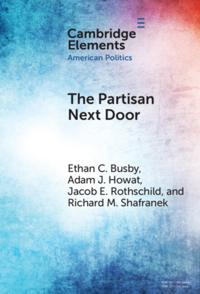
Spar
Partisan Next Door
e-bok, 2021
Engelsk
Les i Adobe DRM-kompatibelt e-bokleserDenne e-boka er kopibeskyttet med Adobe DRM som påvirker hvor du kan lese den. Les mer
In the United States, politics has become tribal and personalized. The influence of partisan divisions has extended beyond the political realm into everyday life, affecting relationships and workplaces as well as the ballot box. To help explain this trend, we examine the stereotypes Americans have of ordinary Democrats and Republicans. Using data from surveys, experiments, and Americans' own words, we explore the content of partisan stereotypes and find that they come in three main flavors-parties as their own tribes, coalitions of other tribes, or vehicles for political issues. These different stereotypes influence partisan conflict: people who hold trait-based stereotypes tend to display the highest levels of polarization, while holding issue-based stereotypes decreases polarization. This finding suggests that reducing partisan conflict does not require downplaying partisan divisions but shifting the focus to political priorities rather than identity-a turn to what we call responsible partisanship.
- Undertittel
- Stereotypes of Party Supporters and Consequences for Polarization in America
- ISBN
- 9781009092425
- Språk
- Engelsk
- Utgivelsesdato
- 7.10.2021
- Tilgjengelige elektroniske format
- PDF - Adobe DRM
- Les e-boka her
- E-bokleser i mobil/nettbrett
- Lesebrett
- Datamaskin