Spar
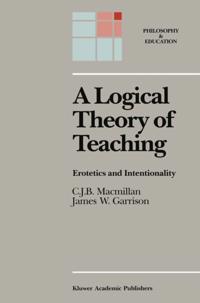
Logical Theory of Teaching
Les i Adobe DRM-kompatibelt e-bokleserDenne e-boka er kopibeskyttet med Adobe DRM som påvirker hvor du kan lese den. Les mer
happens, how it happens, and why it happens. Our assumption ought to be that this is as true in education as it is in atomic physics. But this leaves many other questions to answer. The crucial ones: What kind of science is proper or appropriate to education? How does it differ from physics? What is wrong with the prevai1~ ing, virtually unopposed research tradition in education? What could or should be done to replace it with a more adequate tradi- tion? What concepts are necessary to describe and explain what we find there? It is in this realm that we find ourselves. Where to start? One place - our place, needless to say - is with one limited but central concept in education, teaching. A long philosophical tradition concerned with the nature of teaching goes back (along with everything else) to Plato, divulging most recent- ly in the work of such philosophers as B. O. Smith, Scheffler, Hirst, Komisar, Green, McClellan, Soltis, Kerr, Fenstermacher, et al. An empirical tradition runs parallelto the philosophers -it has its most notable modern proponents in Gage, the Soars, Berliner, Rosen- shine, but its roots can be traced to the Sophists. These two tradi- tions have been at loggerheads over the centuries.
- Undertittel
- Erotetics and Intentionality
- Forfatter
- James W. Garrison, C.J.B. Macmillan
- ISBN
- 9789400930674
- Språk
- Engelsk
- Utgivelsesdato
- 6.12.2012
- Forlag
- SPRINGER NETHERLANDS
- Tilgjengelige elektroniske format
- PDF - Adobe DRM
- Les e-boka her
- E-bokleser i mobil/nettbrett
- Lesebrett
- Datamaskin






