Spar
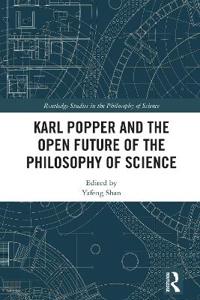
Karl Popper and the Open Future of the Philosophy of Science
This volume revisits and explores Popper’s legacy for contemporary philosophy of science. It develops Popper’s important insights on the methodology and nature of science and investigates new directions in the philosophy of science inspired by Popper’s work.
Karl Popper (1902–1994) is regarded as one of the most influential philosophers of science of the twentieth century. He famously proposed that falsifiability is a genuine virtue of science and the criterion of the scientific status of a theory. Based on this, he developed a systematic account of scientific method and scientific development, namely, falsificationism. Moreover, Popper wrote on a variety of topics, including evolutionary biology, methodological individualism, and probability. However, Popper’s legacy on contemporary philosophy of science is surprisingly thin. This volume develops a Popperian philosophy of science for the twenty-first century. The chapters examine the problem of induction, the demarcation problem, the notion of verisimilitude, critical rationalism, methodological individualism, and the relevance and implications of Popper’s ideas for the philosophy of the natural and social sciences from new perspectives.
Karl Popper and the Open Future of the Philosophy of Science will appeal to scholars and graduate students interested in the history and philosophy of science, philosophy of social science, and twentieth-century philosophy.
- Redaktør
- Yafeng Shan
- ISBN
- 9781032937748
- Språk
- Engelsk
- Vekt
- 446 gram
- Utgivelsesdato
- 22.4.2026
- Forlag
- TAYLOR FRANCIS LTD
- Antall sider
- 212






