Spar
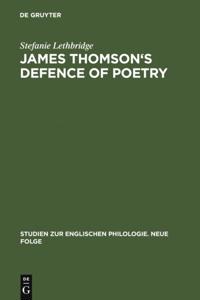
James Thomson's Defence of Poetry
Les i Adobe DRM-kompatibelt e-bokleserDenne e-boka er kopibeskyttet med Adobe DRM som påvirker hvor du kan lese den. Les mer
This study presents a contextual and intertextual reading of James Thomson's (1700--1748) poem The Seasons , taking into consideration some of the presuppositions and habitus of the text's cultural community and the function of the poem's many intertextual allusions. An intertextual reading reveals The Seasons , though heterogeneous on its surface, as coherent in its cultural functionality. An analysis of the poem's intertext uncovers textual strategies that attempt to re-legitimise poetic discourse as a culturally relevant force especially in relation to the newly privileged discourse of natural philosophy.
- Undertittel
- Intertextual Allusion in The Seasons
- Forfatter
- Stefanie Lethbridge
- ISBN
- 9783110913682
- Språk
- Engelsk
- Utgivelsesdato
- 11.7.2011
- Forlag
- De Gruyter
- Tilgjengelige elektroniske format
- PDF - Adobe DRM
- Les e-boka her
- E-bokleser i mobil/nettbrett
- Lesebrett
- Datamaskin