Spar
Institutions and European Trade
Forfatter:
innbundet, 2011
Engelsk
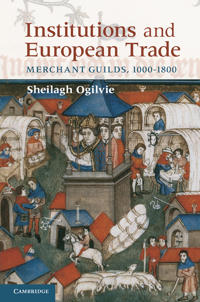
What was the role of merchant guilds in the medieval and early modern economy? Does their wide prevalence and long survival mean they were efficient institutions that benefited the whole economy? Or did merchant guilds simply offer an effective way for the rich and powerful to increase their wealth, at the expense of outsiders, customers and society as a whole? These privileged associations of businessmen were key institutions in the European economy from 1000 to 1800. Historians debate merchant guilds' role in the Commercial Revolution, economists use them to support theories about institutions and development, and policymakers view them as prime examples of social capital, with important lessons for modern economies. Sheilagh Ogilvie's magisterial new history of commercial institutions shows how scrutinizing merchant guilds can help us understand which types of institution made trade grow, why institutions exist, and how corporate privileges affect economic efficiency and human well-being.
- Undertittel
- Merchant Guilds, 1000–1800
- Forfatter
- Sheilagh Ogilvie
- ISBN
- 9780521764179
- Språk
- Engelsk
- Vekt
- 930 gram
- Utgivelsesdato
- 17.3.2011
- Antall sider
- 500