Spar
Hellenism and the Local Communities of the Eastern Mediterranean
e-bok, 2017
Engelsk
Les i Adobe DRM-kompatibelt e-bokleserDenne e-boka er kopibeskyttet med Adobe DRM som påvirker hvor du kan lese den. Les mer
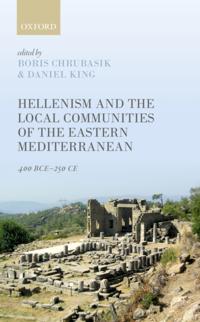
Hellenism and the Local Communities of the Eastern Mediterranean offers a timely re-examination of the relationship between Greek and non-Greek cultures in this region between 400 BCE and 250 CE. The conquests of Alexander the Great and his Successors not only radically reshaped the political landscape, but also significantly accelerated cultural change: in recent decades there has been an important historiographical emphasis on the study of the non-Greek cultures of the Eastern Mediterranean, but less focus on how Greek cultural elements became increasingly visible. Although the process of cross-cultural interaction differed greatly across Asia Minor, Egypt, the Levant, and Mesopotamia, the same overarching questions apply: why did the non-Greek communities of the Eastern Mediterranean engage so closely with Greek cultural forms as well as political practices, and how did this engagement translate into their daily lives? In exploring the versatility and adaptability of Greek political structures, such as the polis, and the ways in which Greek and non-Greek cultures interacted in fields such as medicine, literature, and art, the essays in this volume aim to provide new insight into these questions. At the same time, they prompt a re-interrogation of the process of Hellenization, exploring whether it is still a useful concept for explaining and understanding the dynamics of cultural exchange in the Eastern Mediterranean of this period.
- Undertittel
- 400 BCE-250 CE
- Redaktør
- Daniel King, Boris Chrubasik
- ISBN
- 9780192528209
- Språk
- Engelsk
- Utgivelsesdato
- 15.9.2017
- Forlag
- OUP Oxford
- Tilgjengelige elektroniske format
- Epub - Adobe DRM
- Les e-boka her
- E-bokleser i mobil/nettbrett
- Lesebrett
- Datamaskin






