Spar
Globalizing Seoul
Les i Adobe DRM-kompatibelt e-bokleserDenne e-boka er kopibeskyttet med Adobe DRM som påvirker hvor du kan lese den. Les mer
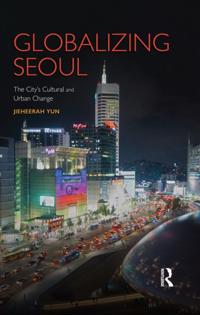
In the decades following the 1997 Asian economic crisis, South Korea sought segyehwa (globalization). Evidence of this is no more evident than in the country's capital, Seoul, where urban development has been central to making the city a global hub and not just the centre of the national economy. However, recent development projects differ from those of the past in that they no longer focus solely on economic efficiency, but on the deployment of a new urban aesthetics. As Jieheerah Yun reveals in Globalizing Seoul: The City's Cultural and Urban Change, the pursuit of globalization and the rebranding of Seoul's image from hard industrial city to soft cultural city have shaped the urban development of the city.Following a brief urban history of Seoul, she focuses on two key themes. In the first, how globalization has contributed to refashioning Korean traditions, she analyzes the policies and actions to preserve Korean folk houses and pre-industrial street layouts, looking in detail at the Bukchon and Insadong areas of the city.Her second theme is an examination of migration and the generation of new minority neighbourhoods amidst the segyehwa policies and the state's efforts to build a multicultural society. In detailed case studies of the redevelopment of Dongdaemun Market as part of rebranding Seoul as the 'world design capital' and of the Itaewon area as both a Special Tourist Zone and a Global Cultural Zone, she shows how multi-ethnic neighbourhoods are threatened by lack of consideration for economic justice and housing provision.
- Undertittel
- The City's Cultural and Urban Change
- Forfatter
- Jieheerah Yun
- ISBN
- 9781351794886
- Språk
- Engelsk
- Utgivelsesdato
- 17.2.2017
- Forlag
- TAYLOR FRANCIS
- Tilgjengelige elektroniske format
- PDF - Adobe DRM
- Les e-boka her
- E-bokleser i mobil/nettbrett
- Lesebrett
- Datamaskin