Spar
Fractals in Science
e-bok, 2013
Engelsk
Les i Adobe DRM-kompatibelt e-bokleserDenne e-boka er kopibeskyttet med Adobe DRM som påvirker hvor du kan lese den. Les mer
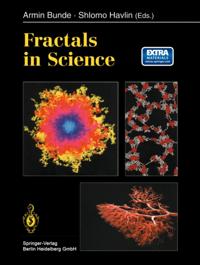
Applying fractal geometry to science is bringing about a breakthrough in our understanding of complex systems in nature that show self-similar or self-affine features. Self-similar and self-affine processes appear everywhere in nature, in galaxies and landscapes, in earthquakes and geological cracks, in aggregates and colloids, in rough surfaces and interfaces, in glassy materials and polymers, in proteins as well as in other large molecules. Fractal structures appear also in the human body; well known examples include the lung and the vascular system. Furthermore, fractal geometry is an important tool in the analysis of phenomena as diverse as rhythms in music melodies and in the human heart- beat and DNA sequences. Since the pioneering work of B.B. Mandelbrot, this interdisciplinary field has expanded very rapidly. The scientific community applying fractal concepts is very broad and ranges from astronomers, geoscientists, physicists, chemists and engineers to biologists and those engaging in medical research.
- Redaktør
- Shlomo Havlin, Armin Bunde
- ISBN
- 9783642779534
- Språk
- Engelsk
- Utgivelsesdato
- 21.12.2013
- Tilgjengelige elektroniske format
- PDF - Adobe DRM
- Les e-boka her
- E-bokleser i mobil/nettbrett
- Lesebrett
- Datamaskin