Spar
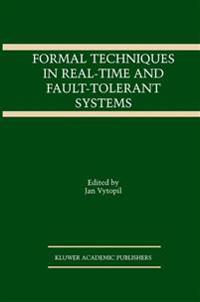
Formal Techniques in Real-Time and Fault-Tolerant Systems
innbundet, 1993
Engelsk
This text focuses on the state of the art in formal specification, development and verification of fault-tolerant computing systems. The term "fault-tolerance" refers to a system having properties which enable it to deliver its specified function and despite (certain) faults of its subsystem. Fault-tolerance is achieved by adding extra hardware and/or software which corrects the effects of faults. In this sense, a system can be called fault-tolerant if it can be proved that the resulting (extended) system under some model of reliability meets the reliability requirements. The main theme of this text can be formulated as follows: how do the specification, development and verification of conventional and fault-tolerant systems differ? How do the notations, methodology and tools used in design and development of fault-tolerant and conventional systems differ? This volume is divided into two parts. The chapters in Part 1 set the stage for what follows by defining the basic notions and practices of the field of design and specification of fault-tolerant systems. The chapters in Part 2 represent the "how-to" section, containing examples of the use of formal methods in specification and development of fault-tolerant systems. The book serves as a reference for researchers in both academia and industry, and may be used as a text for advanced courses on the subject.
- Redaktør
- Jan Vytopil
- Opplag
- 1993 ed.
- ISBN
- 9780792393320
- Språk
- Engelsk
- Vekt
- 446 gram
- Utgivelsesdato
- 30.4.1993
- Forlag
- Springer
- Antall sider
- 208