Spar
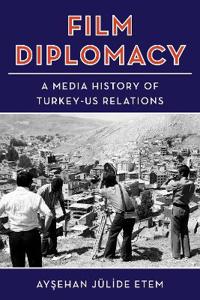
Film Diplomacy
What if the most consequential alliance between the United States and Turkey was not signed—but screened? Beginning in 1930 and crystallizing during the Cold War, the two nations forged an alliance through film: American and Turkish institutions used educational films—short documentaries shown in schools, villages, theaters, and public spaces—not just to inform but to persuade. These films promoted cooperation, encouraged economic development, and modeled ideals of modern citizenship. Yet beneath their instructional surface, they also advanced a racialized vision of progress.
Film Diplomacy offers a powerful new account of how film shaped international relations and national identity. Drawing on previously unexamined and recently declassified archives in Turkey and the United States, Aysehan Jülide Etem demonstrates how both countries used educational films to align institutional agendas and geopolitical interests. The United States built on missionaries’ earlier use of film programs while shifting from Christianization to modernization to promote free market capitalism and prevent the spread of communism. Turkish officials embraced film to promote a homogenous, secular, and Western-facing national identity that erased groups such as Armenians, Blacks, Greeks, Jews, and Kurds. In both contexts, whiteness operated as an invisible standard—shaping who belonged, who was excluded, and what counted as modern.
By tracing the transnational network of educational cinema, Etem uncovers how film functioned as infrastructure, circulating ideologies, organizing institutions, and training citizens. Moving beyond conventional accounts of propaganda and soft power, this book exposes how film was central to the making of modern Turkey and sheds new light on media’s role in global politics.
Film Diplomacy offers a powerful new account of how film shaped international relations and national identity. Drawing on previously unexamined and recently declassified archives in Turkey and the United States, Aysehan Jülide Etem demonstrates how both countries used educational films to align institutional agendas and geopolitical interests. The United States built on missionaries’ earlier use of film programs while shifting from Christianization to modernization to promote free market capitalism and prevent the spread of communism. Turkish officials embraced film to promote a homogenous, secular, and Western-facing national identity that erased groups such as Armenians, Blacks, Greeks, Jews, and Kurds. In both contexts, whiteness operated as an invisible standard—shaping who belonged, who was excluded, and what counted as modern.
By tracing the transnational network of educational cinema, Etem uncovers how film functioned as infrastructure, circulating ideologies, organizing institutions, and training citizens. Moving beyond conventional accounts of propaganda and soft power, this book exposes how film was central to the making of modern Turkey and sheds new light on media’s role in global politics.
- Undertittel
- A Media History of Turkey-US Relations
- Forfatter
- Aysehan Jülide Etem
- ISBN
- 9780231220002
- Språk
- Engelsk
- Vekt
- 188 gram
- Utgivelsesdato
- 5.5.2026
- Antall sider
- 304