Spar
Family-Run Universities in Japan
Les i Adobe DRM-kompatibelt e-bokleserDenne e-boka er kopibeskyttet med Adobe DRM som påvirker hvor du kan lese den. Les mer
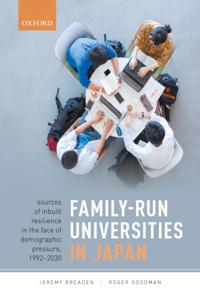
Globally, private universities enrol one in three of all higher education students. In Japan, which has the second largest higher education system in the world in terms of overall expenditure, almost 80% of all university students attend private institutions. According to some estimates up to 40% of these institutions are family businesses in the sense that members of a single family have substantive ownership or control over their operation. This book offers a detailed historical, sociological, and ethnographic analysis of this important, but largely under-studied, category of private universities as family business. It examines how such universities in Japan have negotiated a period of major demographic decline since the 1990s: their experiments in restructuring and reform, the diverse experiences of those who worked and studied within them and, above all, their unexpected resilience. It argues that this resilience derives from a number of 'inbuilt' strengths of family business which are often overlooked in conventional descriptions of higher education systems and in predictions regarding the capacity of universities to cope with dramatic changes in their operating environment. This book offers a new perspective on recent changes in the Japanese higher education sector and contributes to an emerging literature on private higher education and family business across the world.
- Undertittel
- Sources of Inbuilt Resilience in the Face of Demographic Pressure, 1992-2030
- Forfatter
- Jeremy Breaden, Roger Goodman
- ISBN
- 9780192608734
- Språk
- Engelsk
- Utgivelsesdato
- 3.7.2020
- Forlag
- OUP Oxford
- Tilgjengelige elektroniske format
- Epub - Adobe DRM
- Les e-boka her
- E-bokleser i mobil/nettbrett
- Lesebrett
- Datamaskin






