Spar
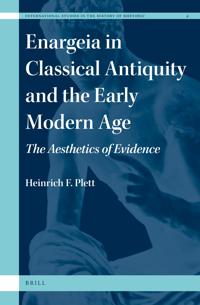
Enargeia in Classical Antiquity and the Early Modern Age
Forfatter:
innbundet, 2012
Engelsk
The present study provides an extensive treatment of the topic of enargeia on the basis of the classical and humanist sources of its theoretical foundation. These serve as the basis for detailed analyses of verbal and pictorial works of the Classical Antiquity and the Early Modern Age. Their theoretical basis is the tradition of classical rhetoric with its principal representatives (Aristotle, Cicero, Quintilian) and their reception history. The ‘enargetic’ approach to the arts may be described as rhetoric of presence and display, or aesthetics of evidence and imagination. Visual imagination plays a major role in the concepts of effect in oratory, poetry, and drama of the Classical Antiquity and the Early Modern Age. Its implementations are manifested in the Second Sophistic and in the Early Modern Age, there above all in the works of William Shakespeare.
- Undertittel
- The Aesthetics of Evidence
- Forfatter
- Heinrich F. Plett
- ISBN
- 9789004227026
- Språk
- Engelsk
- Vekt
- 1180 gram
- Utgivelsesdato
- 14.8.2012
- Forlag
- BRILL
- Antall sider
- 240






