Spar
Death and Tenses
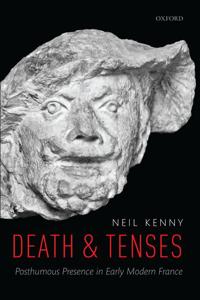
In what tense should we refer to the dead? The question has long been asked, from Cicero to Julian Barnes. Answering it is partly a matter of grammar and stylistic convention. But the hesitation, annoyance, even distress that can be caused by the 'wrong' tense suggests that more may be at stake--our very relation to the dead. This book, the first to test that hypothesis, investigates how tenses were used in sixteenth- and early seventeenth-century France (especially in French but also in Latin) to refer to dead friends, lovers, family members, enemies, colleagues, writers, officials, kings and queens of recent times, but also to those who had died long before, whether Christ, the saints, or the ancient Greeks and Romans who posthumously filled the minds of Renaissance humanists. Did tenses refer to the dead in ways that contributed to granting them differing degrees of presence (and absence)? Did tenses communicate dimensions of posthumous presence (and absence) that partly eluded more concept-based affirmations? The investigation ranges from funerary and devotional writing to Eucharistic theology, from poetry to humanist paratexts, from Rabelais's prose fiction to Montaigne's Essais. Primarily a work of literary and cultural history, it also draws on early modern grammatical thought and on modern linguistics (with its concept of aspect and its questioning of 'tense'), while arguing that neither can fully explain the phenomena studied. The book briefly compares early modern usage with tendencies in modern French and English in the West, asking whether changes in belief about posthumous survival have been accompanied by changes in tense-use.
- Undertittel
- Posthumous Presence in Early Modern France
- Forfatter
- Neil Kenny
- ISBN
- 9780198754039
- Språk
- Engelsk
- Vekt
- 580 gram
- Utgivelsesdato
- 17.12.2015
- Forlag
- Oxford University Press
- Antall sider
- 306