Gå direkte til innholdet
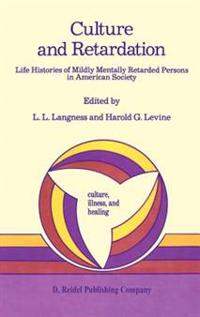
Culture and Retardation
Spar

Culture and Retardation

innbundet, 1986
Engelsk
Mental retardation in the United States is currently defined as " ... signif­ icantly subaverage general intellectual functioning existing concurrently with deficits in adaptive behavior, and manifested during the development period" (Grossman, 1977). Of the estimated six million plus mentally retarded individuals in this country fully 75 to 85% are considered to be "func­ tionally" retarded (Edgerton, 1984). That is, they are mildly retarded persons with no evident organic etiology or demonstrable brain pathology. Despite the relatively recent addition of adaptive behavior as a factor in the definition of retardation, 1.0. still remains as the essential diagnostic criterion (Edgerton, 1984: 26). An 1.0. below 70 indicates subaverage functioning. However, even such an "objective" measure as 1.0. is prob­ lematic since a variety of data indicate quite clearly that cultural and social factors are at play in decisions about who is to be considered "retarded" (Edgerton, 1968; Kamin, 1974; Langness, 1982). Thus, it has been known for quite some time that there is a close relationship between socio-economic status and the prevalence of mild mental retardation: higher socio-economic groups have fewer mildly retarded persons than lower groups (Hurley, 1969). Similarly, it is clear that ethnic minorities in the United States - Blacks, Mexican-Americans, American Indians, Puerto Ricans, Hawaiians, and others - are disproportionately represented in the retarded population (Mercer, 1968; Ramey et ai., 1978).
Undertittel
Life Histories of Mildly Mentally Retarded Persons in American Society
ISBN
9789027721778
Språk
Engelsk
Vekt
446 gram
Utgivelsesdato
31.7.1986
Antall sider
212

