Spar
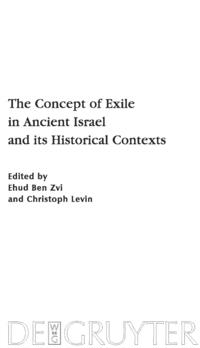
Concept of Exile in Ancient Israel and its Historical Contexts
e-bok, 2010
Engelsk
Les i Adobe DRM-kompatibelt e-bokleserDenne e-boka er kopibeskyttet med Adobe DRM som påvirker hvor du kan lese den. Les mer
In ancient Israelite literature Exile is seen as a central turning point within the course of the history of Israel. In these texts "e;the Exile"e; is a central ideological concept. It serves to explain the destruction of the monarchic polities and the social and economic disasters associated with them in terms that YHWH punished Israel/Judah for having abandoned his ways. As it develops an image of an unjust Israel, it creates one of a just deity. But YHWH is not only imagined as just, but also as loving and forgiving, for the exile is presented as a transitory state: Exile is deeply intertwined with its discursive counterpart, the certain "e;Return"e;. As the Exile comes to be understood as a necessary purification or preparation for a renewal of YHWH's proper relationship with Israel, the seemingly unpleasant Exilic conditions begin, discursively, to shape an image of YHWH as loving Israel and teaching it. Exile is dystopia, but one that carries in itself all the seeds of utopia. The concept of Exile continued to exercise an important influence in the discourses of Israel in the Second Temple period, and was eventually influential in the production of eschatological visions.
- Redaktør
- Christoph Levin, Ehud Ben Zvi
- ISBN
- 9783110221787
- Språk
- Engelsk
- Utgivelsesdato
- 19.10.2010
- Forlag
- De Gruyter
- Tilgjengelige elektroniske format
- PDF - Adobe DRM
- Les e-boka her
- E-bokleser i mobil/nettbrett
- Lesebrett
- Datamaskin






