Spar
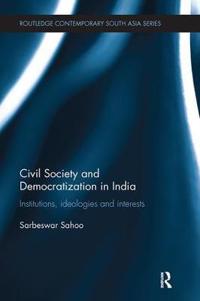
Civil Society and Democratization in India
Developing a distinctive theoretical framework on civil society, this book examines how Non-Governmental Organizations (NGOs) contribute towards democratization in India and what conditions facilitate or inhibit their contribution. It assesses three different kinds of politics within civil society – liberal pluralist, neo-Marxist, and communitarian – which have had different implications in relation to democratization.
By making use of in-depth empirical analysis and comparative case studies of three developmental NGOs that work among the tribal communities in the socio-historical context of south Rajasthan, the book shows that civil society is not necessarily a democratizing force, but that it can have contradictory consequences in relation to democratization. It discusses how the democratic effect of civil society is not a result of the "stock of social capital" in the community but is contingent upon the kinds of ideologies and interests that are present or ascendant not just within the institutions of civil society but also within the state.
The book delivers new insights on NGOs, democratization, civil society, the state, political society, tribal politics, politics of Hindu Nationalism, international development aid and grassroots social movements in India. It enables readers to understand better the multifaceted nature of civil society, its relationship with the state, and its implications for development and democratization.
- Undertittel
- Institutions, Ideologies and Interests
- Forfatter
- Sarbeswar Sahoo
- ISBN
- 9780415659291
- Språk
- Engelsk
- Vekt
- 570 gram
- Utgivelsesdato
- 11.3.2013
- Forlag
- Routledge
- Antall sider
- 206