Spar
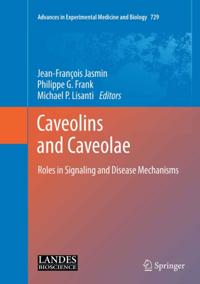
Caveolins and Caveolae
e-bok, 2012
Engelsk
Les i Adobe DRM-kompatibelt e-bokleserDenne e-boka er kopibeskyttet med Adobe DRM som påvirker hvor du kan lese den. Les mer
Caveolae are 50-100 nm flask-shaped invaginations of the plasma membrane that are primarily composed of cholesterol and sphingolipids. Using modern electron microscopy techniques, caveolae can be observed as omega-shaped invaginations of the plasma membrane, fully-invaginated caveolae, grape-like clusters of interconnected caveolae (caveosome), or as transcellular channels as a consequence of the fusion of individual caveolae. The caveolin gene family consists of three distinct members, namely Cav-1, Cav-2 and Cav-3. Cav-1 and Cav-2 proteins are usually co-expressed and particularly abundant in epithelial, endothelial, and smooth muscle cells as well as adipocytes and fibroblasts. On the other hand, the Cav-3 protein appears to be muscle-specific and is therefore only expressed in smooth, skeletal and cardiac muscles. Caveolin proteins form high molecular weight homo- and/or hetero-oligomers and assume an unusual topology with both their N- and C-terminal domains facing the cytoplasm.
- Undertittel
- Roles in Signaling and Disease Mechanisms
- ISBN
- 9781461412229
- Språk
- Engelsk
- Utgivelsesdato
- 12.3.2012
- Forlag
- SPRINGER NEW YORK
- Tilgjengelige elektroniske format
- PDF - Adobe DRM
- Les e-boka her
- E-bokleser i mobil/nettbrett
- Lesebrett
- Datamaskin