Spar
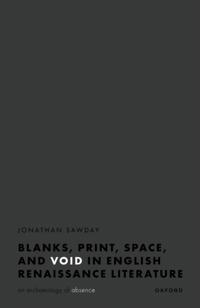
Blanks, Print, Space, and Void in English Renaissance Literature
Les i Adobe DRM-kompatibelt e-bokleserDenne e-boka er kopibeskyttet med Adobe DRM som påvirker hvor du kan lese den. Les mer
Blanks, Print, Space, and Void in English Renaissance Literature is an inquiry into the empty spaces encountered not just on the pages of printed books in c.1500-1700, but in Renaissance culture more generally. The book argues that print culture in the sixteenth and seventeenth centuries helped to foster the modern idea of the 'gap' (where words, texts, images, and ideas are constructed as missing, lost, withheld, fragmented, or perhaps never devised in the first place). It re-imagines how early modern people reacted not just to printed books and documents of many different kinds, but also how the very idea of emptiness or absence began to be fashioned in a way which still surrounds us. Jonathan Sawday leads the reader through the entire landscape of early modern print culture, discussing topics such as: space and silence; the exploration of the vacuum; the ways in which race and racial identity in early modern England were constructed by the language and technology of print; blackness and whiteness, together with lightness, darkness, and sightlessness; cartography and emptiness; the effect of typography on reading practices; the social spaces of the page; gendered surfaces; hierarchies of information; books of memory; pages constructed as waste or vacant; the genesis of blank forms and early modern bureaucracy; the political and devotional spaces of printed books; the impact of censorship; and the problem posed by texts which lack endings or conclusions. The book itself ends by dwelling on blank or empty pages as a sign of human mortality. Sawday pays close attention to the writings of many of the familiar figures in English Renaissance literary culture - Sidney, Shakespeare, Donne, Jonson, and Milton, for example - as well as introducing readers to a host of lesser-known figures. The book also discusses the work of numerous women writers from the period, including Aphra Behn, Ann Bradstreet, Margaret Cavendish, Lady Jane Gray, Lucy Hutchinson, melia Lanyer, Isabella Whitney, and Lady Mary Wroth.
- Undertittel
- An Archaeology of Absence
- Forfatter
- Jonathan Sawday
- ISBN
- 9780192660503
- Språk
- Engelsk
- Utgivelsesdato
- 5.7.2023
- Forlag
- OUP Oxford
- Tilgjengelige elektroniske format
- PDF - Adobe DRM
- Les e-boka her
- E-bokleser i mobil/nettbrett
- Lesebrett
- Datamaskin






