Spar
Aristotle's Theory of Substance
Les i Adobe DRM-kompatibelt e-bokleserDenne e-boka er kopibeskyttet med Adobe DRM som påvirker hvor du kan lese den. Les mer
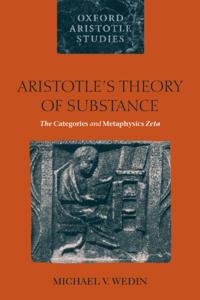
Aristotle's views on the fundamental nature of reality are usually taken to be inconsistent. The two main sources for these views are the Categories and the central books of the Metaphysics, particularly book Zeta. In the early theory of the Categories the basic entities of the world are concrete objects such as Socrates: Aristotle calls them 'primary substances'. But the later theory awards this title to the forms of concrete objects. Michael Wedin proposes a compatibilist solution to this long-standing puzzle, arguing that Aristotle is engaged in quite different projects in the two works. The theory of Metaphysics Zeta is meant to explain central features of the standing doctrine of the Categories, and so presupposes the essential truth of the early theory. The Categories offers a theory of underlying ontological configurations, while book Zeta gives form the status of primary substance because it is primarily the form of a concrete object that explains its nature, and this form is the substance of the object. So when the late theory identifies primary substance with form, it appeals to an explanatory primacy that is quite distinct from the ontological primacy that dominates the Categories. Wedin's new interpretation thus allows us to see the two treatises as complementing each other: they are parts of a unified history of substance.
- Undertittel
- The Categories and Metaphysics Zeta
- Forfatter
- Michael V. Wedin
- ISBN
- 9780191519451
- Språk
- Engelsk
- Utgivelsesdato
- 15.6.2000
- Forlag
- Oxford University Press
- Tilgjengelige elektroniske format
- PDF - Adobe DRM
- Les e-boka her
- E-bokleser i mobil/nettbrett
- Lesebrett
- Datamaskin






