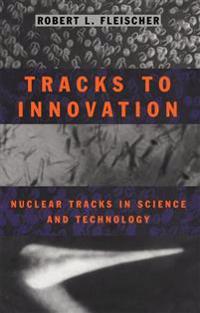
Tracks to Innovation
Kirjailija:
Sidottu, 1998
englanti
72,80 €
Lisää toivelistalle
A serendipitous discovery in nuclear physics has led to a useful tool in materials science. In the late 1950s, scientists at General Electric (among them the author) discovered that when mica is exposed to energetic charged particles (such as are emitted in radioactive decay or occur in cosmic rays), the particles leave latent tracks in the material. When such a material is chemically etched, the tracks are revealed as narrow, deep pits, whose size and shape is determined both by the particle that made the track and by the technique used in etching. It soon turned out that glass, plastics, or certain other materials can be similarly treated. This discovery paved the way not only for a new and useful method of measuring radioactivity, it has also found widespread applications in other fields, ranging from geology and materials science to archaeology and art history. Thus, for example, naturally produced tracks can be used to estimate the age of a mineral deposit or an archaeological material; and deliberately produced tracks can be used to make extremely fine filters. Fleischer presents the history of these developments and discusses the applications of the technique in a way that will be interesting to anyone with a minimal knowledge of physics.
- Alaotsikko
- Nuclear Tracks in Science and Technology
- Kirjailija
- Fleischer Robert L.
- Painos
- 1998
- ISBN
- 9780387983424
- Kieli
- englanti
- Paino
- 518 grammaa
- Julkaisupäivä
- 12.1.1998
- Kustantaja
- Springer-Verlag New York Inc.
- Sivumäärä
- 193