Tallenna
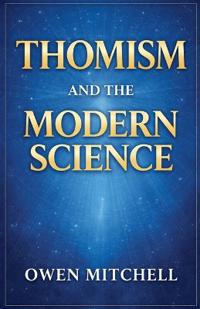
Thomism and the Modern Science
Lue Adobe DRM-yhteensopivassa e-kirjojen lukuohjelmassaTämä e-kirja on kopiosuojattu Adobe DRM:llä, mikä vaikuttaa siihen, millä alustalla voit lukea kirjaa. Lue lisää
The modern world often speaks as though the discoveries of contemporary science have rendered the classical metaphysical vision obsolete, as though the universe revealed by particle accelerators, radio telescopes, and genetic sequencing has no room for the principles articulated by St. Thomas Aquinas. This assumption has become so widespread that many accept it without question. The result is a cultural atmosphere in which scientific knowledge is treated as the only legitimate form of knowledge, while metaphysics, theology, and even philosophy are dismissed as relics of a pre‑scientific age. Yet this supposed conflict rests on a profound misunderstanding—of science, of Thomism, and of the Catholic intellectual tradition that once nourished the very disciplines now imagined to oppose it.This book begins from a different premise: that Thomism and modern science are not enemies but potential allies, provided each is understood on its own terms. Thomism offers a metaphysical framework capable of grounding the intelligibility of nature, the reliability of reason, and the coherence of scientific inquiry. Modern science, for its part, offers a wealth of empirical data that can enrich our understanding of the created order. The tension between them arises not from their intrinsic principles but from the philosophical assumptions that have come to dominate scientific culture since the Enlightenment. These assumptions—materialism, reductionism, and the denial of final causality—are not scientific conclusions but metaphysical claims masquerading as scientific neutrality. They distort the interpretation of scientific findings and obscure the deeper meaning of the natural world.
- Kirjailija
- Owen Mitchell
- ISBN
- 9798232658564
- Kieli
- englanti
- Julkaisupäivä
- 28.4.2026
- Kustantaja
- Distributed via Draft2Digital
- Formaatti
- Epub - Adobe DRM
- Lue e-kirjoja täällä
- Lue e-kirja mobiililaitteella/tabletilla
- Lukulaite
- Tietokone