Tallenna
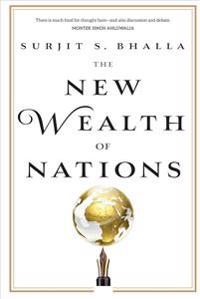
The New Wealth of Nations
In Imagine There's No Country: Poverty, Inequality, and Growth in the Era of Globalization, published by the Petersen Institute in 2002, the author had discussed the effects of globalization on the world's economies, especially the economies in the developing world. This book also introduced an economic, and empirical, definition of the term 'middle class'.
Second among Equals advances the concept and definition of the middle class and measures the role the middle class has played in the fortunes of societies since 1500 AD. The first scholar to define, and discuss, the importance of the middle class was Aristotle, circa 350 BC.
There is an intimate relationship between the development of the middle class and economic development. This link is explored in depth in Second among Equals. Further, a division of the world's population into four classes--the absolute poor, the emerging middle class, the middle class and the rich--can help answer some questions relating to the politics, and political economy, of the developed world today.
In particular, the book will explore the economic reasons behind the political success of globalization in the Western world till the early 2000s, and now its falling from grace in these very same countries (e.g. Brexit, the ascent of right wing nationalism Trump], etc.).
The book will also explore the political debate surrounding wealth and income inequality (top 1 vs bottom 99 per cent); for example, wealth inequality deals with financial wealth and ignores the enormous magnitude, and contribution, of the most important form of wealth for the bottom 99 per cent--education (human capital).
Second among Equals concludes with a discussion of how one cannot fool 'mother nature'--the inexorable tide of development and the middle class in large developing economies (especially India and China) will continuously alter the parameters of the world as we know it today. In addition, a sideshow in the book is a discussion as to how the best way to view developments in India and China over the last thirty years (these two economies contain close to 40 per cent of the world population) is from the vantage point that India is China with a five to ten year lag.
- Kirjailija
- Surjit S. Bhalla
- ISBN
- 9789386797025
- Kieli
- englanti
- Paino
- 431 grammaa
- Julkaisupäivä
- 23.11.2017
- Kustantaja
- SS India
- Sivumäärä
- 320







