Tallenna
The Japan of Pure Invention
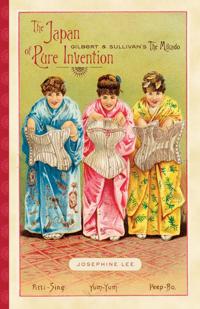
Long before Sofia Coppola’s Lost in Translation, long before Barthes explicated his empire of signs, even before Puccini’s Madame Butterfly, Gilbert and Sullivan’s The Mikado presented its own distinctive version of Japan. Set in a fictional town called Titipu and populated by characters named Yum-Yum, Nanki-Poo, and Pooh-Bah, the opera has remained popular since its premiere in 1885. Tracing the history of The Mikado’s performances from Victorian times to the present, Josephine Lee reveals the continuing viability of the play’s surprisingly complex racial dynamics as they have been adapted to different times and settings. Lee connects yellowface performance to blackface minstrelsy, showing how productions of the 1938–39 Swing Mikado and Hot Mikado, among others, were used to promote African American racial uplift. She also looks at a host of contemporary productions and adaptations, including Mike Leigh’s film Topsy-Turvy and performances of The Mikado in Japan, to reflect on anxieties about race as they are articulated through new visions of the town of Titipu. The Mikado creates racial fantasies, draws audience members into them, and deftly weaves them into cultural memory. For countless people who had never been to Japan, The Mikado served as the basis for imagining what “Japanese” was.
- Alaotsikko
- Gilbert and Sullivan's the Mikado
- Kirjailija
- Josephine Lee
- ISBN
- 9780816665808
- Kieli
- englanti
- Paino
- 310 grammaa
- Julkaisupäivä
- 28.4.2010
- Kustantaja
- University of Minnesota Press
- Sivumäärä
- 280







