Tallenna
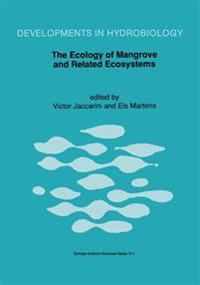
The Ecology of Mangrove and Related Ecosystems
The mangrove, seagrass and coral reef ecosystems are of paramount ecological and economical importance but have already undergone great degradation, which is advancing at an alarming rate. If present trends continue, the natural resource basis of the economy and ecology of tropical coastal regions will soon be ruined. This was the unanimous conclusion of the 110 scientists from 23 countries which gathered in Mombasa, Kenya, for a Symposium on the ecology of these ecosystems. Mangrove forest systems yield large amounts of fish, crabs, prawn and oysters. They are also valuable sources of fuelwood, timber, tannin and other natural products. Their non-marketable value is of equal importance: stabilization of the coastline, an indispensable nursery ground for numerous marine species with commercial value, a natural filter maintaining the clarity of nearshore water, a home for resident and migratory birds and other wildlife. Many of the true mangrove flora and fauna are now endangered by the clearing of the mangroves. It has been shown that in many countries between 25 and 100% of the mangrove forest has been destroyed already in the last twenty years. The international scientific assembly concluded that much can be done to stop the degradation of these damaged ecosystems and to rehabilitate them. But new techniques must be found to use them on a sustainable basis for long-term economic return and for the well-being of coastal human settlements and a health environment.
- Alaotsikko
- Proceedings of the International Symposium held at Mombasa, Kenya, 24–30 September 1990
- Toimittaja
- Victor Jaccarini, Els Martens
- Painos
- Reprinted from HYDROBIOLOGIA, 247, 1993
- ISBN
- 9780792320494
- Kieli
- englanti
- Paino
- 446 grammaa
- Julkaisupäivä
- 31.12.1992
- Kustantaja
- Springer
- Sivumäärä
- 266







