Tallenna
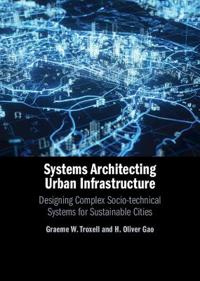
Systems Architecting Urban Infrastructure
As cities face mounting pressures from aging infrastructure, climate change, and social inequities, new approaches are needed to design resilient, sustainable, and equitable urban systems. This book introduces a powerful, step-by-step methodology for conceptualizing and managing complex infrastructure projects through the unique lens of systems architecture, showing how this approach supports better decision-making, transparency, and collaboration. Drawing on real-world examples, the book explores concepts including trade-offs, stakeholder needs, and system interdependencies. It demonstrates how to integrate qualitative and quantitative factors, navigate uncertainty, and reason across diverse disciplines and timescales. Crucially, this book offers long-awaited solutions for bridging the technical and social demands of urban infrastructure design. By extending systems architecture into the urban domain, it offers a practical yet theoretically grounded framework for addressing 21st-century infrastructure challenges. This accessible and forward-looking guide is valuable for anyone involved in shaping the future of urban systems, from engineers to urbanists.
- Alaotsikko
- Designing Complex Socio-technical Systems for Sustainable Cities
- Kirjailija
- Graeme W. Troxell, H. Oliver Gao
- ISBN
- 9781316516850
- Kieli
- englanti
- Paino
- 446 grammaa
- Julkaisupäivä
- 31.10.2026
- Kustantaja
- Cambridge University Press
- Sivumäärä
- 200







