Tallenna
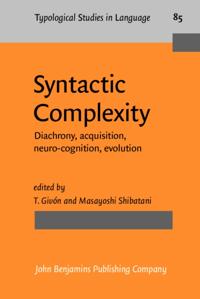
Syntactic Complexity
e-kirja, 2009
englanti
Lue Adobe DRM-yhteensopivassa e-kirjojen lukuohjelmassaTämä e-kirja on kopiosuojattu Adobe DRM:llä, mikä vaikuttaa siihen, millä alustalla voit lukea kirjaa. Lue lisää
Complex hierarchic syntax is considered one of the hallmarks of human language. The highest level of syntactic complexity, recursive-embedded clauses, has been singled out by some for a special status as the apex of the uniquely-human language faculty - evolutionary but somehow immune to adaptive selection. This volume, coming out of a symposium held at Rice University in March 2008, tackles syntactic complexity from multiple developmental perspectives. We take it for granted that grammar is an adaptive instrument of communication, assembled upon the pre-existing platform of pre-linguistic cognition. Most of the papers in the volume deal with the two grand developmental trends of human language: diachrony, the communal enterprise directly responsible for fashioning synchronic morpho-syntax; and ontogeny, the individual endeavor directly responsible for the acquisition of competent grammatical performance. The genesis of syntactic complexity along these two developmental trends is considered alongside with the cognition and neurology of grammar and of syntactic complexity, and the evolutionary relevance of diachrony, ontogeny and pidginization is argued on general bio-evolutionary grounds. Lastly, several of the contributions to the volume suggest that recursive embedding is not in itself an adaptive target, but rather the by-product of two distinct adaptive gambits: the recruitment of conjoined clauses as modal operators on other clauses and the subsequent condensation of paratactic into syntactic structures.
- Alaotsikko
- Diachrony, acquisition, neuro-cognition, evolution
- Toimittaja
- Givon T. Givon, Shibatani Masayoshi Shibatani
- ISBN
- 9789027290144
- Kieli
- englanti
- Julkaisupäivä
- 22.4.2009
- Kustantaja
- JOHN BENJAMINS PUBLISHING COMPANY
- Formaatti
- PDF - Adobe DRM
- Lue e-kirjoja täällä
- Lue e-kirja mobiililaitteella/tabletilla
- Lukulaite
- Tietokone







