Tallenna
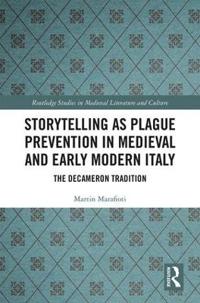
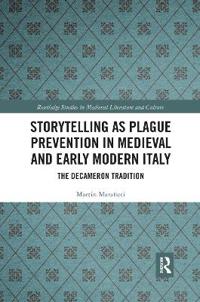
Storytelling as Plague Prevention in Medieval and Early Modern Italy
Kirjailija:
nidottu, 2020
englanti
Through close readings of five Italian collections of novellas written over a 500-year period, Martin Marafioti explores the literary tradition of storytelling, and particularly its efficacy as a healing tool following traumatic visitations from the plague. In this study, Giovanni Boccaccio's Decameron provides the framework for later authors. Although Boccaccio was not the first writer to deal with pestilence or epidemics in a literary work, he was the first to unite the topos of a life-threatening context with a public health disaster like the Black Death, and certainly the first author to propose storytelling as a means of prophylaxis in times of plague. Marafioti goes on to analyze Franco Sacchetti's Trecento Novelle, Giovanni Sercambi's Novelliere, Celio Malespini's Duecento Novelle, and Francesco Argelati's Decamerone, following in its longue-durée the ups and down, structurally and thematically, of the realistic novella as a genre.
- Alaotsikko
- The Decameron Tradition
- Kirjailija
- Martin Marafioti
- ISBN
- 9780367667283
- Kieli
- englanti
- Paino
- 231 grammaa
- Julkaisupäivä
- 30.9.2020
- Kustantaja
- Routledge
- Sivumäärä
- 138