Tallenna
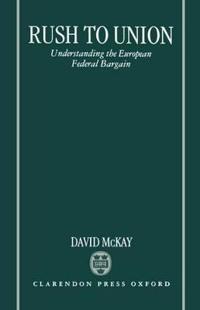
Rush to Union
The decision of Maastricht to create a political union and in particular to move towards a single currency constitutes something of an intellectual puzzle. Why did political leaders agree to cede the most important economic function of the modern state to a supernational authority? And why was the decision taken in 1991 rather than 1981 or 1961? This book attempts to answer these questions by adapting William Rikers's federalism theory to the European case. Part I of the book makes the claim that by the late 1980s political elites in all the EU member states had become convinced that inflation must be controlled at all costs and that the only way of ensuring this was the adoption of a single currency policy policed by an independant European bank. Alternative policies based on economic nationalism were discredited and no major political party in any of the EU states dissented from the single currency solution. The commitment to the resulting federal bargain became evident during the currency crisis of 1992 and 1993 when governments of both left and right pursued deflationary policies in the midst of a recession in order to retain their credibility as potential candidates for monetary union. Part II considers the viability of union by examining the relationship between fiscal centralization and political centralization in Europe and in other federations. It is argued that given the variations among member states, European union can only work with a relatively strong federal government accountable via Europe-wide political parties operating in a powerful European Parliament. The book concludes that European political union is not tenable in the absence of these fundamental changes.
- Alaotsikko
- Understanding the European Federal Bargain
- Kirjailija
- David McKay
- ISBN
- 9780198280583
- Kieli
- englanti
- Paino
- 381 grammaa
- Julkaisupäivä
- 25.7.1996
- Kustantaja
- Clarendon Press
- Sivumäärä
- 192