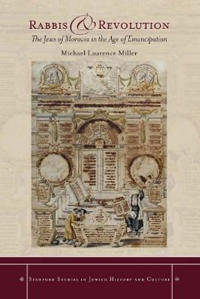
Rabbis and Revolution
37,40 €
Lisää toivelistalle
The Habsburg province of Moravia straddled a complicated linguistic, cultural, and national space, where German, Slavic, and Jewish spheres overlapped, intermingled, and sometimes clashed. Situated in the heart of Central Europe, Moravia was exposed to major Jewish movements from the East and West, including Haskalah (Jewish enlightenment), Hasidism, and religious reform. Moravia's rooted and thriving rabbinic culture helped moderate these movements and, in the case of Hasidism, keep it at bay.
During the Revolution of 1848, Moravia's Jews took an active part in the prolonged and ultimately successful struggle for Jewish emancipation in the Habsburg lands. The revolution ushered in a new age of freedom, but it also precipitated demographic, financial, and social transformations, disrupting entrenched patterns that had characterized Moravian Jewish life since the Middle Ages. These changes emerged precisely when the Czech-German conflict began to dominate public life, throwing Moravia's Jews into the middle of the increasingly virulent nationality conflict. For some, a cautious embrace of Zionism represented a way out of this conflict, but it also represented a continuation of Moravian Jewry's distinctive role as mediator—and often tamer—of the major ideological movements that pervaded Central Europe in the Age of Emancipation.
- Alaotsikko
- The Jews of Moravia in the Age of Emancipation
- Kirjailija
- Michael Miller
- ISBN
- 9780804799713
- Kieli
- englanti
- Paino
- 263 grammaa
- Julkaisupäivä
- 11.12.2015
- Kustantaja
- Stanford University Press
- Sivumäärä
- 480