Tallenna
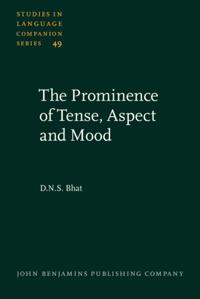
Prominence of Tense, Aspect and Mood
Lue Adobe DRM-yhteensopivassa e-kirjojen lukuohjelmassaTämä e-kirja on kopiosuojattu Adobe DRM:llä, mikä vaikuttaa siihen, millä alustalla voit lukea kirjaa. Lue lisää
The book puts forth an exciting hypothesis for the typologist. Its major claim is that languages can generally be regarded as belonging to a tense-prominent, aspect-prominent or mood-prominent language type. This grouping can be based upon the relative prominence that languages attach to one or the other of the three verbal categories, namely tense, aspect and mood, by grammaticalizing the chosen category to a greater degree than others, and by making it more obligatory, more systematic and more pervasive than others. The grouping, however, involves a gradation, as is indeed the case with other typological groupings, with some languages manifesting the relevant characteristic more strikingly than others.There are several characteristics that can be correlated with the relative prominence that languages attach to verbal categories. For example, tense-prominent languages tend to have mostly active but not stative verbs. They also tend to keep adjectives as a distinct category, or group them with nouns but not with verbs. Verbal forms used for foregrounding generally belong to the most prominent verbal category. These and other similar correlations make this typological classification worth pursuing. The book also contains a descriptive study of the three verbal categories.
- Kirjailija
- Bhat D.N.S. Bhat
- ISBN
- 9789027298737
- Kieli
- englanti
- Julkaisupäivä
- 15.3.1999
- Kustantaja
- JOHN BENJAMINS PUBLISHING COMPANY
- Formaatti
- PDF - Adobe DRM
- Lue e-kirjoja täällä
- Lue e-kirja mobiililaitteella/tabletilla
- Lukulaite
- Tietokone







