Tallenna
President's Czars
Lue Adobe DRM-yhteensopivassa e-kirjojen lukuohjelmassaTämä e-kirja on kopiosuojattu Adobe DRM:llä, mikä vaikuttaa siihen, millä alustalla voit lukea kirjaa. Lue lisää
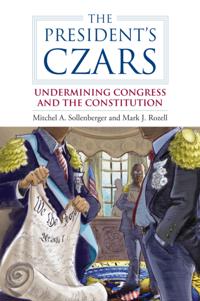
Faced with crises that would challenge any president, Barack Obama authorized pay czar Kenneth Feinberg to oversee the $20 billion fund for victims of the BP oil spill and to establishand enforceexecutive pay guidelines for companies that received $700 billion in federal bailout money. Feinbergs office comes with vastly expansive policy powers along with seemingly deep pockets; yet his position does not formally fit anywhere within our governments constitutional framework.The very word czar seems inappropriate in a constitutional republic, but it has come to describe any executive branch official who has significant authority over a policy area, works independently of agency or Department heads, and is not confirmed by the Senateor subject to congressional oversight. Mitchel Sollenberger and Mark Rozell provide the first comprehensive overview of presidential czars, tracing the history of the position from its origins through its initial expansion under FDR and its dramatic growth during the presidencies of George W. Bush and Barack Obama. The Presidents Czars shows how, under pressure to act on the policy front, modern presidents have increasingly turned to these appointed officials, even though by doing so they violate the Appointments Clause and can also run into conflict with the nondelegation doctrine and the principle that a president cannot unilaterally establish offices without legislative support. Further, Sollenberger and Rozell contend that czars not only are ill-conceived but also disrupt a governing system based on democratic accountability. A sobering overview solidly grounded in public law analysis, this study serves as a counter-argument to those who would embrace an excessively powerful presidency, one with relatively limited constraints. Among other things, it proposes the restoration of accountability-starting with significant changes to Title 3 of the U.S. Code, which authorizes the president to appoint White House employees without regard to any other provision of law.Ultimately, the authors argue that czars have generally not done a good job of making the executive branch bureaucracy more effective and efficient. Whatever utility presidents may see in appointing czars, Sollenberger and Rozell make a strong case that the overall damage to our constitutional system is greatand that this runaway practice has to stop.
- Alaotsikko
- Undermining Congress and the Constitution
- Kirjailija
- Mitchel A. Sollenberger, Mark J. Rozell
- ISBN
- 9780700621897
- Kieli
- englanti
- Julkaisupäivä
- 17.8.2015
- Kustantaja
- UNIVERSITY PRESS OF KANSAS
- Formaatti
- PDF - Adobe DRM
- Lue e-kirjoja täällä
- Lue e-kirja mobiililaitteella/tabletilla
- Lukulaite
- Tietokone







