Tallenna
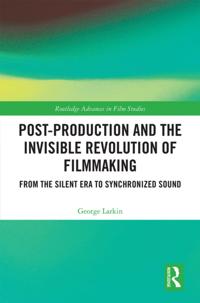
Post-Production and the Invisible Revolution of Filmmaking
Lue Adobe DRM-yhteensopivassa e-kirjojen lukuohjelmassaTämä e-kirja on kopiosuojattu Adobe DRM:llä, mikä vaikuttaa siihen, millä alustalla voit lukea kirjaa. Lue lisää
Post-Production and the Invisible Revolution of Filmmaking studies the discourses surrounding post-production, as well as the aesthetic effects of its introduction during the 1920s and 1930s, by exploring the philosophies and issues faced by practitioners during this transitional, transformative period.The introduction of post-production during the transition from silent cinema to the synchronized sound era in the 1920s American studio system resulted in what has been a previously unheralded and invisible revolution in filmmaking. Thereafter, a film no longer arose from a live and variable combination of audio and visual in the theater, as occurred during the silent film era, where each exhibition was a singular event. The new system of post-production effectively shifted control of a film's final form from the theater to the editing room. With this new process, filmmakers could obtain and manipulate an array of audio elements and manufacture a permanent soundtrack. This transition made possible a product that could be easily mass-produced, serving both to transform and homogenize film presentation, fundamentally creating a new art form.With detailed research and analysis and nearly 50 illustrations, this book is the ideal resource for students and researchers of film history and post-production.
- Alaotsikko
- From the Silent Era to Synchronized Sound
- Kirjailija
- George Larkin
- ISBN
- 9780429960659
- Kieli
- englanti
- Julkaisupäivä
- 7.12.2018
- Kustantaja
- TAYLOR FRANCIS
- Formaatti
- PDF - Adobe DRM
- Lue e-kirjoja täällä
- Lue e-kirja mobiililaitteella/tabletilla
- Lukulaite
- Tietokone







