Tallenna
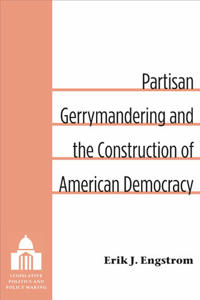
Partisan Gerrymandering and the Construction of American Democracy
Erik J. Engstrom offers a historical perspective on the effects of gerrymandering on elections and party control of the U.S. national legislature. Aside from the requirements that districts be continuous and, after 1842, that each select only one representative, there were few restrictions on congressional districting. Unrestrained, state legislators drew and redrew districts to suit their own partisan agendas. With the rise of the “one-person, one-vote” doctrine and the implementation of the Voting Rights Act of 1965, however, redistricting became subject to court oversight.
Engstrom evaluates the abundant cross-sectional and temporal variation in redistricting plans and their electoral results from all the states, from 1789 through the 1960s, to identify the causes and consequences of partisan redistricting. His analysis reveals that districting practices across states and over time systematically affected the competitiveness of congressional elections, shaped the partisan composition of congressional delegations, and, on occasion, determined party control of the House of Representatives.
- Kirjailija
- Erik J. Engstrom
- ISBN
- 9780472036578
- Kieli
- englanti
- Paino
- 310 grammaa
- Julkaisupäivä
- 20.1.2016
- Kustantaja
- The University of Michigan Press
- Sivumäärä
- 236